
Mole, Wart and Skin Tag Removal in Delhi — Kiara Lifestyle Clinic
Moles, warts, and skin tags are common skin growths that can appear anywhere on the body — and while most are harmless, they can affect your appearance, get caught on clothing or jewellery, or simply make you feel self-conscious. At Kiara Lifestyle Clinic, Dr. Kriti Jain (MBBS, MD Dermatology) offers safe, precise mole, wart and skin tag removal using advanced dermatological techniques for smooth, scar-free results.
Whether you want a mole checked for safety, a wart removed before it spreads, or skin tags cleared for cosmetic reasons, our clinic provides expert evaluation and removal tailored to your specific growth type and skin condition. No DIY risks — just safe, clinical care.
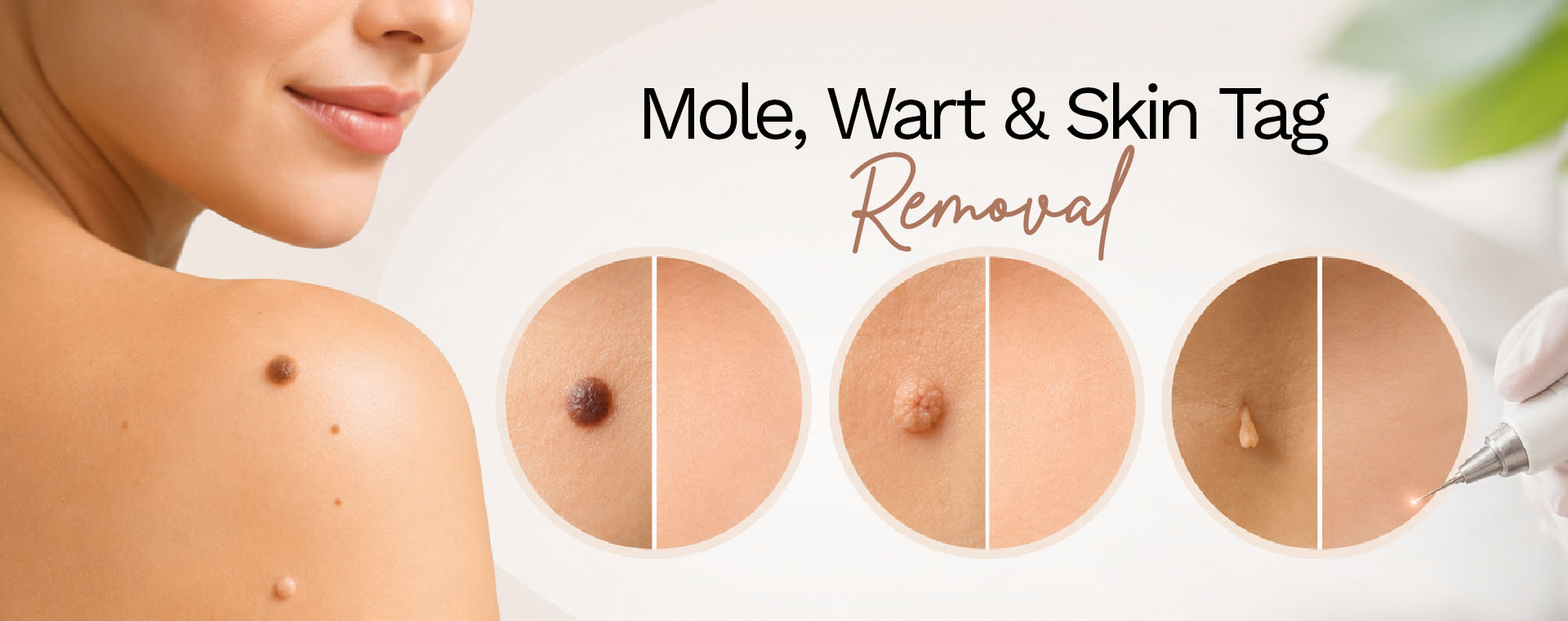
Understanding Moles, Warts and Skin Tags — What’s the Difference
Before any mole, wart or skin tag removal, Dr. Kriti Jain examines the growth carefully to confirm exactly what it is and whether removal is purely cosmetic or medically necessary.
- Moles (Nevi) — Clusters of pigment cells that appear as brown, black, or skin-toned spots, usually present from birth or developing over time.
- Warts — Rough, raised growths caused by the human papillomavirus (HPV), often appearing on hands, feet, or face.
- Skin Tags — Small, soft, hanging growths of skin commonly found in areas of friction like the neck, underarms, and eyelids.
- Atypical or Changing Moles — Moles that change in size, shape, or colour require careful evaluation to rule out skin cancer risk.
- Genital or Plantar Warts — Specific wart types requiring specialised treatment due to their location and HPV strain.
- Multiple Skin Tags — Often linked to friction, weight changes, or genetics, and can be removed safely in a single session.
A proper diagnosis ensures that what looks cosmetic is not something that needs further medical attention — and vice versa.
Why Choose Professional Removal Over Home Remedies
Many people attempt to remove moles, warts, or skin tags at home using thread, nail clippers, or over-the-counter products — but this carries real risks.
- Risk of Infection — Unsterile tools and improper technique can introduce bacteria, leading to painful infections.
- Scarring — DIY removal often damages surrounding skin, leaving permanent scars where a clean medical procedure would not.
- Incomplete Removal — Home methods often leave part of the growth behind, causing it to return or worsen.
- Missed Cancer Signs — Removing a mole at home destroys tissue needed for biopsy, potentially missing early signs of skin cancer.
- Excessive Bleeding — Skin tags and moles have blood supply that, if cut incorrectly, can cause uncontrolled bleeding.
- Spreading Warts — Warts are contagious; improper home removal can spread the virus to other parts of the body or to others.
Our Mole, Wart and Skin Tag Removal Options in Delhi
Dr. Kriti Jain selects the safest and most effective removal method based on the type, size, and location of your growth.
- Laser Removal — Precise, minimal-scarring technique ideal for facial moles, flat warts, and small skin tags.
- Electrocautery — Uses controlled heat to remove warts and skin tags quickly with minimal bleeding.
- Cryotherapy — Freezes warts and certain moles using liquid nitrogen, causing them to fall off naturally within days.
- Surgical Excision — Recommended for larger or atypical moles, allowing the tissue to be sent for biopsy if needed.
- Radiofrequency Ablation — A virtually scar-free technique well-suited for skin tags and small raised growths.
- Biopsy & Pathology Testing — For any mole showing irregular features, tissue is examined to rule out malignancy before or after removal.
How Mole, Wart and Skin Tag Removal Works at Kiara Lifestyle Clinic
- Initial Skin Examination — Dr. Kriti Jain examines the growth using dermoscopy to confirm its type and assess whether it requires further testing.
- Discussing the Right Method — Based on size, location, and type, we recommend the safest and most effective removal technique for you.
- Local Anaesthesia (if needed) — For larger moles or sensitive areas, a numbing injection ensures a completely comfortable procedure.
- The Removal Procedure — The growth is removed using laser, cryotherapy, electrocautery, or excision, typically completed within minutes.
- Aftercare Instructions — We provide clear wound care guidance to ensure proper healing and minimise any risk of scarring.
- Follow-Up & Biopsy Results — If a biopsy was taken, we share results and next steps; otherwise, healing is monitored at a quick follow-up visit.
“Not every mole or growth needs to be removed, but every patient deserves a proper evaluation. At Kiara Lifestyle Clinic, safety always comes first — we assess thoroughly, remove precisely, and make sure nothing important is ever overlooked.” — Dr. Kriti Jain, MBBS, MD Dermatology
Is Mole, Wart or Skin Tag Removal Right for You?
Book a consultation if you have: a mole that has changed in size, shape, or colour recently, warts that keep spreading or returning, skin tags catching on clothing, jewellery, or razors, multiple skin tags affecting your appearance, or any growth you simply want evaluated for peace of mind.
Avoid self-treatment if you are: trying to cut, tie off, or freeze a growth at home, using unverified wart removal products without guidance, picking at a mole or wart repeatedly, or ignoring a mole that has changed recently without medical evaluation.
Frequently Asked Questions — Mole, Wart and Skin Tag Removal
Q1. Is mole, wart, or skin tag removal painful?
A: Most procedures are quick and involve minimal discomfort. Local anaesthesia is used for larger moles or sensitive areas to ensure complete comfort.
Q2. Will removal leave a scar?
A: When performed by an experienced dermatologist using the right technique, scarring is minimal to none in most cases, especially for skin tags and small growths.
Q3. How do I know if a mole needs to be checked?
A: Any mole that changes in size, shape, colour, or develops irregular borders should be evaluated promptly. Dr. Kriti Jain can assess this during a quick consultation.
Q4. Can warts come back after removal?
A: Since warts are caused by a virus, they can occasionally recur. We choose the most effective method for your wart type to minimise this risk.
Q5. How long does the procedure take?
A: Most mole, wart, and skin tag removals are completed within 15 to 30 minutes, depending on size and number of growths.
Q6. What is the cost of mole, wart or skin tag removal at Kiara Lifestyle Clinic?
A: Cost depends on the type, size, and number of growths removed. We provide a complete, transparent cost breakdown during your consultation.
Book Your Mole, Wart or Skin Tag Removal Consultation Today
Whether it’s for safety or simply for smoother, clearer skin, Dr. Kriti Jain (MBBS, MD Dermatology) and the team at Kiara Lifestyle Clinic provide safe, precise, and scar-conscious removal for moles, warts, and skin tags. We offer consultations to properly evaluate your growth before recommending the right removal method. Our clinic is conveniently located in Delhi and welcomes both walk-in and pre-booked appointments. Reach us via phone, WhatsApp, or our online contact form. Explore our related services: pigmentation treatment, scar revision, acne scar treatment, and PRP therapy.